
Custom GPO-3 Machined Parts for Electrical Insulation|High-Strength GPO-3 Sheets
In modern electrical engineering and industrial manufacturing, material selection directly determines the safety, reliability, and lifespan of equipment. For applications requiring both electrical insulation and high mechanical strength, GPO-3 has become a common choice for engineers.
This article introduces the advantages of custom GPO-3 machined parts, analyzes the core characteristics of high-strength GPO-3 sheets, and provides a professional guide to achieving excellent performance through precision machining.
GPO-3—A High-Performance Composite Material
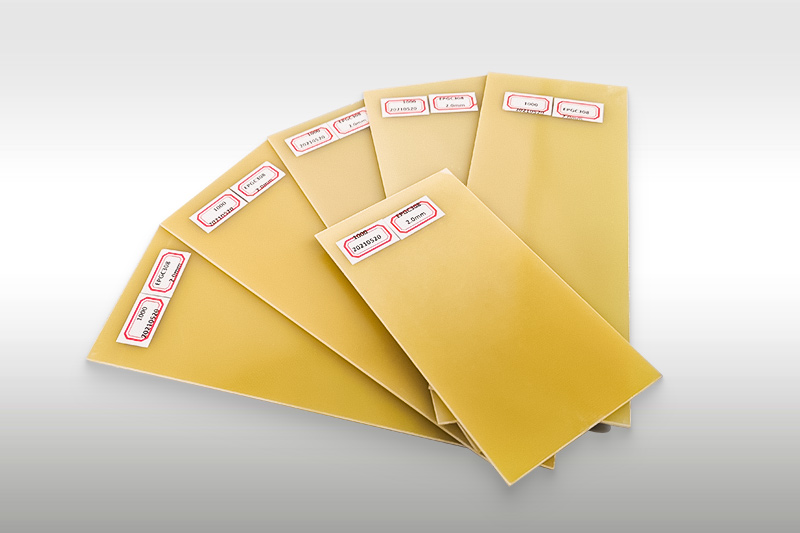
GPO-3 is a thermosetting composite material molded from unsaturated polyester resin reinforced with glass fiber mat. This material possesses excellent electrical insulation properties, arc resistance, and flame retardancy (UL 94 V-0 rating).
Compared to traditional insulation materials (such as epoxy resin boards or phenolic paperboard), high-strength GPO-3 sheets exhibit superior performance in terms of moisture absorption, chemical resistance, and machinability.
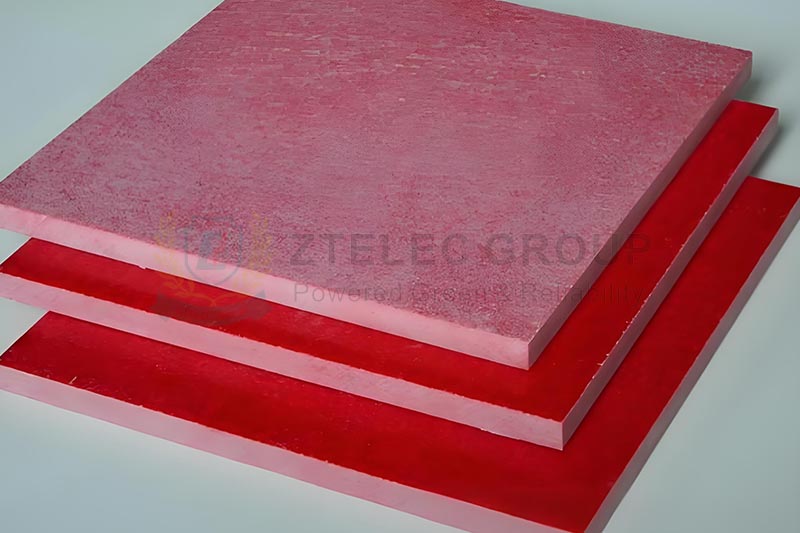
Key Performance Parameters of High-Strength GPO-3 Sheets
When evaluating material specifications, the following technical parameters are important indicators for assessing the quality of high-strength GPO-3 sheets:
Dielectric Strength: The vertical withstand voltage of GPO-3 sheets typically reaches 10–20 kV/mm. It is safe for use in medium and high voltage electrical equipment, preventing creepage and breakdown.
Mechanical Strength: The flexural strength of GPO-3 sheets is typically above 130 MPa. Even in high-vibration environments, structural components made of GPO-3 maintain shape stability and are not prone to brittle fracture.
Arc Resistance: GPO-3 has an arc resistance time of over 180 seconds. In environments where arcs may occur, such as relays and contactors, this material effectively prevents arc propagation, ensuring operator safety.
Heat Resistance and Flame Retardancy: The long-term operating temperature of GPO-3 material can reach 155℃ (Class F). It is self-extinguishing upon contact with fire, exhibits no dripping, and meets internationally accepted safety standards.
Why Choose Custom GPO-3 Machined Parts?
In many critical applications, standard sheet sizes cannot directly meet design requirements. By opting for custom GPO-3 machined parts, you can achieve the following core advantages:
Precise Dimensional Tolerances
Whether it is busbar supports, circuit breaker insulation barriers, or motor rotor spacers, electrical equipment demands high geometric accuracy. Custom CNC machining ensures that hole positions, edges, and flatness of GPO-3 parts can reach tolerances of ±0.05 mm, perfectly matching assembly requirements.
Complex Geometries
Although GPO-3 offers high strength, traditional manual cutting methods struggle to handle intricate shapes. Custom machining allows for designs with irregular holes, grooves, steps, or special angles, meeting the needs of non-standard electrical enclosures or specialized fixtures.
Reduced Material Waste and Internal Stress Damage
Processing methods such as stamping may introduce micro-cracks in high-strength GPO-3 sheets, potentially compromising insulation performance. Professional custom machining utilizes high-speed milling and waterjet cutting technologies to achieve high material utilization without damaging the material structure.
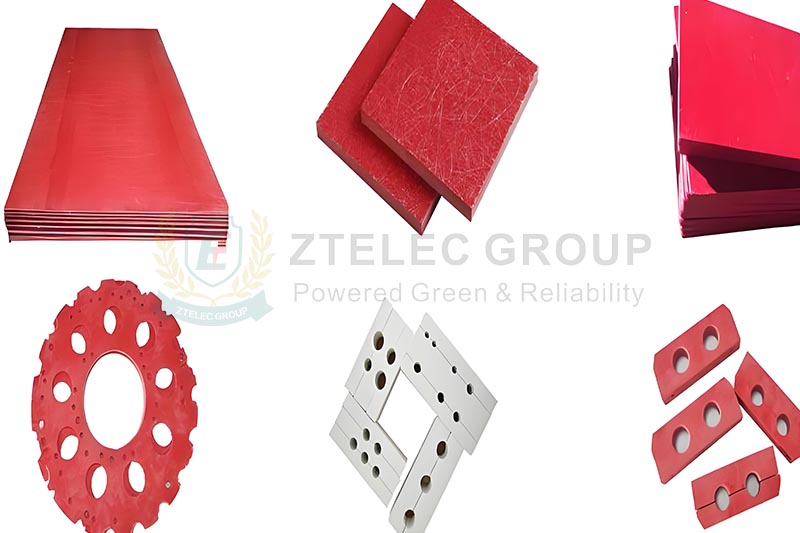
Key Considerations for Customizing GPO-3 Machined Parts
Material Thickness Selection: Common thicknesses range from 2 mm to 50 mm. Purchasers should select the appropriate thickness based on load-bearing capacity and insulation requirements.
Machining Accuracy Control: Utilize CNC machining equipment to ensure dimensional tolerances are controlled within ±0.1 mm, meeting assembly accuracy requirements.
Drawings and Tolerance Standards: Detailed 2D/3D drawings (e.g., CAD or STEP format) are recommended, clearly defining critical dimensional tolerances.
Surface Treatment and Edge Optimization: Chamfering and deburring are performed after machining to improve assembly safety and product reliability.
Typical Applications of GPO-3 Machined Parts
1. Electrical Industry:
Switchgear insulation supports
Circuit breaker baffles, arc-extinguishing chamber components
Busbar clamps and brackets
2. New Energy:
Photovoltaic inverter insulation components
Electrical isolation components for energy storage systems
3. Industrial Equipment:
Motor insulation components
Insulation support components in automated equipment
Whether sourcing custom-made GPO-3 machined parts or purchasing high-strength GPO-3 sheet metal for in-house machining, the supplier's raw material sourcing and technical capabilities are crucial factors.
High-quality GPO-3 material should meet international certification standards such as UL and RoHS. Professional machining services require multi-axis CNC machining centers, waterjet cutting machines, and a comprehensive quality control system (such as pressure testing and dimensional inspection).
If you are looking for a partner that provides both high-quality GPO-3 sheet metal and one-stop precision machining, we recommend focusing on the supplier's case experience, delivery time, and ability to provide drawing optimization suggestions. Choosing the right materials and machining methods will help improve the lifespan and safety of equipment under harsh operating conditions.
Get your customized solution!
oil immersed transformer lifespan
oil immersed transformer maintenance
transformer lifecycle
transformer insulation aging
dry type transformer temperature monitoring
- more+releated article
- 2026-05-11How Long Does an Oil-Immersed Transformer Last
- 2026-05-08Modern Power System Dry-Type Transformer Insta
- 2026-05-07Oil-Immersed Transformer Overheating: Causes,
- 2026-05-07Dry-Type Transformers for Data Centers: 2026 R
- 2026-04-30Air-Core Reactor vs Iron-Core Reactor: How to
- 2026-04-29Compact Enclosed Transformer for Smart Grid: T
- 2026-04-2812-Pulse and 24-Pulse Phase-Shifting Transform
- 2026-04-27Oil-Immersed Transformers for Industrial Plant
- 2026-04-25Why Dry-Type Transformers Are Preferred for Ho
- 2026-04-24Enclosed Transformer Outdoor Solutions: IP Pro
- ELECTRICAL INSULATION BOARD MATERIALS
- ELECTRICAL INSULATION MATERIALS
- POWER TRANSFORMER
- ENAMELED WIRE
- SWITCHGEAR

transformer insulation aging
transformer lifecycle
oil immersed transformer lifespan
oil immersed transformer maintenance
dry type transformer installation
dry type transformer temperature monitoring
dry type transformer maintenance
dry type transformer sizing
transformer cooling system failure
transformer overheating causes
oil immersed transformer overheating
transformer oil temperature
harmonic mitigation
dry type transformer
K factor transformer
data center transformer
Cast resin transformer
insulation oil degradation
DGA analysis transformer
transformer fault analysis
oil immersed transformer failure
smart grid transformer
compact enclosed transformer
integrated distribution transformer
compact transformer substation