
Transformer Conservator Types and Structure | Oil Conservator Tank Guide
In oil-immersed power transformers, the conservator tank is a critical component that ensures long-term stable operation. As power grid voltage levels and reliability requirements continue to increase, conservator structures and sealing technologies have also evolved. Understanding conservator types and structural characteristics helps extend insulating oil life, reduce maintenance costs, and improve overall transformer reliability.
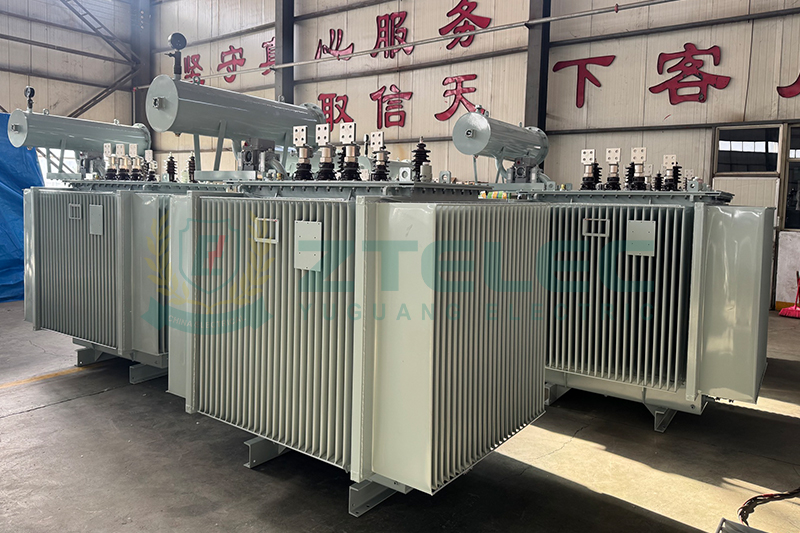
What Is a Transformer Conservator
A transformer conservator, also known as an oil conservator tank, expansion tank, or oil reservoir, is an auxiliary container installed on the top or upper side of the transformer main tank. It is connected to the transformer oil tank through piping. Its primary function is to accommodate the volume expansion of insulating oil caused by temperature variations, ensuring the transformer tank remains filled with oil while minimizing contact between oil and air.
During transformer operation, winding temperature fluctuates with load changes, causing oil temperature to rise and fall accordingly. This leads to volume variation in the insulating oil. Without a conservator, pressure inside the transformer tank would fluctuate significantly, potentially causing oil leakage, seal failure, and accelerated oil aging. Therefore, the conservator is an essential component for maintaining transformer insulation system stability.
Main Types of Transformer Conservators
Open-Type Conservator
The open-type conservator is a traditional structure where the top is connected to the atmosphere through a breather. The insulating oil surface is directly exposed to air. This design is simple, cost-effective, and easy to maintain, and was widely used in small and medium-capacity transformers.
However, continuous exposure of oil to air allows oxygen and moisture to enter the oil, leading to oxidation, increased acidity, and reduced insulation performance. To mitigate moisture ingress, silica gel breathers are commonly installed. With increasing oil quality requirements, open-type conservators are gradually being replaced by sealed designs.
Diaphragm-Type Conservator
The diaphragm-type conservator uses an elastic diaphragm installed inside the tank, dividing it into oil and air compartments. When oil temperature rises, the expanding oil pushes the diaphragm upward and expels air. When temperature decreases, the diaphragm returns, allowing oil to flow back into the transformer tank.
This structure completely separates insulating oil from air, effectively preventing oxidation and moisture contamination. Diaphragm conservators provide good sealing performance and low maintenance requirements, making them widely used in medium and high-voltage transformers. The durability and oil resistance of diaphragm materials are key technical factors.
Bladder-Type Conservator
The bladder-type conservator replaces the flat diaphragm with a flexible bladder suspended inside the tank. The bladder is filled with dry air or nitrogen, while insulating oil occupies the outer space. As oil volume changes, the bladder expands or contracts, maintaining complete isolation between oil and ambient air.
This design offers superior sealing performance and stable operation even under tilted installation conditions, making it suitable for large transformers and space-constrained environments. The bladder is a wear component, and replacement is required if damage occurs, resulting in relatively higher maintenance costs.
Hermetically Sealed Conservator
The hermetically sealed conservator typically adopts a nitrogen-sealed structure. Both the conservator and transformer tank are completely isolated from ambient air. A controlled pressure of dry nitrogen above the oil surface compensates for oil volume changes.
This structure minimizes oil oxidation and significantly extends insulating oil service life. It is suitable for harsh environments such as high altitude, heavy pollution, and extreme climates. Although the system requires pressure monitoring and gas control devices, its use in high-end transmission projects continues to increase.
Basic Structure of a Transformer Conservator
A transformer conservator typically consists of a tank body, connecting pipe, oil level indicator, breather, valves, and sealing components. The tank body is usually cylindrical and made of steel with corrosion-resistant treatment. Its capacity is designed according to transformer oil volume requirements.
The connecting pipe links the conservator to the transformer tank and ensures free oil circulation. The oil level indicator, installed on the side of the conservator, provides real-time oil level monitoring. Common types include glass tube and magnetic level gauges. The breather, used mainly in open-type conservators, contains silica gel to remove moisture from incoming air.
Drain and filling valves are used for maintenance and oil replenishment. The diaphragm or bladder serves as the core sealing element in sealed conservators, typically made of oil-resistant rubber or composite materials with good elasticity and aging resistance.
Technology Development Trends and Application Outlook
As transmission and distribution systems move toward higher voltage levels and reliability, conservator technology continues to advance. New sealing materials improve diaphragm and bladder service life and reduce maintenance frequency. Intelligent oil level monitoring systems are increasingly used, enabling real-time monitoring of oil level, temperature, and sealing condition.
Lightweight design is another development trend. High-strength aluminum alloys and composite materials are gradually replacing traditional steel structures to reduce weight while maintaining mechanical strength. Although some new transformer designs reduce reliance on conservators, they remain indispensable for oil-immersed power transformers.
With growing demand for energy efficiency and lifecycle management, high-performance conservators will continue evolving toward improved sealing, intelligent monitoring, and extended service life, enhancing power grid operational reliability.
The transformer conservator plays a crucial role in controlling oil volume variation, isolating air, and extending insulating oil life. From open-type structures to diaphragm, bladder, and hermetically sealed designs, conservator technology has continuously improved to meet reliability demands. Proper selection, installation, and maintenance can significantly enhance transformer operational safety and service life.
oil immersed transformer lifespan
oil immersed transformer maintenance
transformer lifecycle
transformer insulation aging
dry type transformer temperature monitoring
- more+releated article
- 2026-05-11How Long Does an Oil-Immersed Transformer Last
- 2026-05-08Modern Power System Dry-Type Transformer Insta
- 2026-05-07Oil-Immersed Transformer Overheating: Causes,
- 2026-05-07Dry-Type Transformers for Data Centers: 2026 R
- 2026-04-30Air-Core Reactor vs Iron-Core Reactor: How to
- 2026-04-29Compact Enclosed Transformer for Smart Grid: T
- 2026-04-2812-Pulse and 24-Pulse Phase-Shifting Transform
- 2026-04-27Oil-Immersed Transformers for Industrial Plant
- 2026-04-25Why Dry-Type Transformers Are Preferred for Ho
- 2026-04-24Enclosed Transformer Outdoor Solutions: IP Pro
- ELECTRICAL INSULATION BOARD MATERIALS
- ELECTRICAL INSULATION MATERIALS
- POWER TRANSFORMER
- ENAMELED WIRE
- SWITCHGEAR



transformer insulation aging
transformer lifecycle
oil immersed transformer lifespan
oil immersed transformer maintenance
dry type transformer installation
dry type transformer temperature monitoring
dry type transformer maintenance
dry type transformer sizing
transformer cooling system failure
transformer overheating causes
oil immersed transformer overheating
transformer oil temperature
harmonic mitigation
dry type transformer
K factor transformer
data center transformer
Cast resin transformer
insulation oil degradation
DGA analysis transformer
transformer fault analysis
oil immersed transformer failure
smart grid transformer
compact enclosed transformer
integrated distribution transformer
compact transformer substation