
Ring Main Unit vs Switchgear: Key Differences and When to Use Each
Engineers, contractors and utility buyers often ask whether they need a ring main unit or a full switchgear lineup for a medium voltage project. The question sounds simple, but the two terms do not describe equal categories. A ring main unit, usually shortened to RMU, is a specific type of compact switchgear. Switchgear is the wider family of equipment used to switch, protect and isolate electrical circuits.
This guide explains what each one is, how they differ in design, ratings, protection, footprint and cost, and when each option makes more sense. By the end you will be able to match the equipment to your network instead of choosing by habit or price alone.
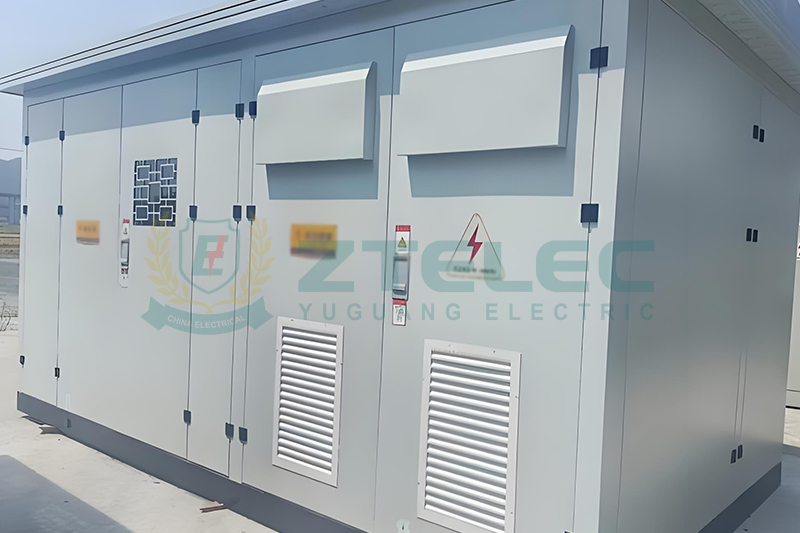
What Is a Ring Main Unit (RMU)?
A ring main unit is a factory-assembled, metal-enclosed set of medium voltage switching devices built into one compact housing. It is designed mainly for secondary distribution, which is the part of the network that brings power from primary substations to local transformers, buildings and small industrial loads.
The name comes from the ring network layout. In a ring, power can reach each substation from two directions. If one cable section fails, the faulty section can be isolated and supply is restored through the other path. An RMU provides the two ring switches that connect to the incoming and outgoing cables, plus a third function that feeds a distribution transformer.
A typical RMU combines load break switches for the ring cables with either a fuse-switch combination or a vacuum circuit breaker for transformer protection. Common arrangements are described by letter codes, such as two cable switches and one transformer feeder. The internal insulation is often SF6 gas or solid insulation, and the live parts are sealed, which makes the unit resistant to dust, humidity and small animals.
What Is Switchgear?
Switchgear is a general term for the assemblies of switching, protection, measuring and control devices used to energize, de-energize and isolate electrical equipment. It exists at low, medium and high voltage. In this comparison we focus on medium voltage switchgear, commonly used from about 3 kV to 36 kV.
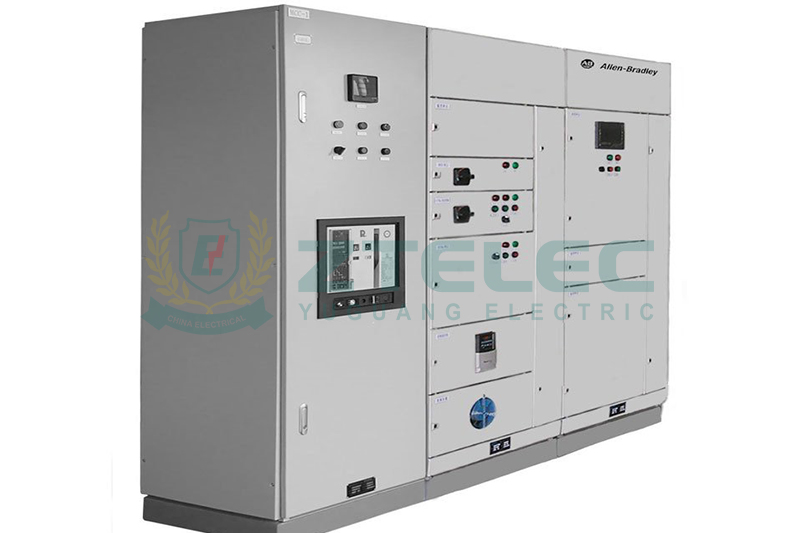
Medium voltage switchgear is usually built as a lineup of separate panels, often called cubicles or feeders. Each panel holds equipment such as a circuit breaker, disconnector, earthing switch, current transformers, voltage transformers, protection relays and a busbar system. Panels can be added or arranged to create incomer, bus coupler, feeder and metering functions.
Two construction families are common. Air-insulated switchgear, known as AIS, uses air as the main insulation between live parts. Gas-insulated switchgear, known as GIS, encloses live parts in a sealed compartment, usually with SF6 or an alternative insulating gas, which reduces the space needed. Most modern designs are metal-enclosed and tested to the IEC 62271 series, including the classification for internal arc withstand.
Is an RMU a Type of Switchgear?
Yes. An RMU is a compact form of medium voltage switchgear tailored to one job: ring and transformer feeder switching in secondary distribution. When people compare ring main unit vs switchgear, they usually mean an RMU versus a modular, panel-based switchboard with withdrawable circuit breakers and a full relay protection scheme. The rest of this article uses that meaning.
Ring Main Unit vs Switchgear: Comparison Table
The table below summarizes the typical differences. Exact values depend on the manufacturer and model, so always check the datasheet for your project.
| Aspect | Ring main unit (RMU) | Modular MV switchgear |
|---|---|---|
| Main role | Ring switching and transformer feeding in secondary distribution | Main distribution, incomer, feeder, bus coupler and motor control |
| Construction | Compact, fixed, often sealed in one enclosure | Separate panels, often with withdrawable breakers |
| Typical switching device | Load break switch, fuse-switch, vacuum breaker | Vacuum circuit breaker with disconnector and earthing switch |
| Protection | Fuses or basic relay on the breaker feeder | Advanced multifunction relays and selective protection schemes |
| Rated current | Lower, typically hundreds of amperes | Higher, up to several thousand amperes |
| Space needed | Small, suitable for compact substations and outdoor kiosks | Larger, needs a switchroom |
| Expandability | Limited, depends on the extensible module design | High, panels can be added to the busbar |
| Initial cost | Lower per substation | Higher, but scalable |
Design and Construction Differences
The biggest visible difference is how the equipment is packaged. An RMU puts several functions into a single tank or a small set of connected modules. Because the parts are compact and factory-sealed, installation on site is fast. Cables are connected, the unit is earthed and commissioned, and there is little internal work to do.
Modular switchgear is built as an assembly of individual panels. Each compartment, such as the breaker, busbar and cable compartments, is separated by metal partitions. Withdrawable circuit breakers can be moved between service, test and disconnected positions, which allows the breaker to be removed for maintenance without switching off the entire board. This flexibility adds size and cost, but it gives operators much more control over the system.
Protection and Control Capability
Protection is where the two options separate most clearly. In an RMU, transformer feeders are commonly protected by high-voltage fuses combined with a switch, or by a compact vacuum circuit breaker with a simple protection relay. The load break switches on the ring cables can carry and switch normal load current, but they are not designed to interrupt full short-circuit current. Fault clearing therefore relies on upstream breakers or on the fuse in the transformer feeder.
Full switchgear uses circuit breakers on every important circuit. These breakers can interrupt fault current and work with multifunction protection relays that offer overcurrent, earth fault, directional and differential functions, as well as communication with SCADA and automation systems. This makes it possible to build selective protection schemes, where only the faulty section trips and the rest of the network stays in service.
Ratings and Capacity
RMUs are generally rated for lower current and shorter feeder counts. They are well suited to loads such as distribution transformers, small commercial buildings and residential developments. Rated voltage typically falls in the 12 kV to 24 kV range, with some models designed for higher levels.
Modular switchgear covers a much wider range. It can handle higher busbar currents and higher short-circuit ratings, which matters in industrial plants, large campuses, data centers and utility substations where the fault level is high and many feeders share one bus. If your network needs large incomers, bus couplers or motor feeders, an RMU will not be enough.
Footprint and Installation
Space is often the deciding factor in urban projects. An RMU can fit inside a compact prefabricated substation, a basement corner or an outdoor enclosure next to the transformer. Its small footprint and sealed design allow installation in places where a traditional switchroom would be impractical.
Modular switchgear needs a dedicated room with enough space for panel front access, breaker withdrawal, cable entry and safe working clearances. Gas-insulated designs reduce the size compared with air-insulated ones, but they still require more room than an RMU with the same number of outgoing feeders.
Cost and Lifecycle Considerations
An RMU normally has a lower purchase price and lower civil works cost for each secondary substation. Since a distribution network may contain hundreds of such substations, this saving adds up quickly. Sealed construction also reduces maintenance frequency, which lowers operating cost over the equipment life.
Modular switchgear costs more at the start, but it gives value where flexibility matters. Adding a feeder later usually means adding a panel, not replacing the whole assembly. The higher cost buys stronger protection, better monitoring options and easier maintenance of individual circuits.
Maintenance and Safety
Both types should comply with relevant IEC 62271 standards and be tested for internal arc performance where personnel safety is a concern. RMUs tend to need less routine maintenance because their live parts are enclosed. However, a fault inside a sealed unit can be harder to repair on site, and the whole unit may need to be replaced or returned to the factory.
Withdrawable switchgear allows maintenance of a single breaker or panel, and spare breakers can be swapped in to reduce downtime. The tradeoff is a more demanding maintenance program and a need for trained operators who follow proper isolation and earthing procedures.
When to Use a Ring Main Unit
Choose an RMU when your goal is efficient secondary distribution. Typical cases include ring networks in cities, residential and commercial complexes, campuses, airports, and renewable energy sites where a transformer needs to be connected to a medium voltage cable ring. It is also a good option for compact substations and outdoor kiosks, where space is tight and simple, reliable switching is enough.
When to Use Full Switchgear
Choose modular medium voltage switchgear when the installation is a main distribution point rather than a simple transformer connection. Examples include primary substations, large industrial plants, hospitals, data centers and mines. These sites need higher current ratings, several incomers and feeders, bus couplers, motor starters and advanced relay protection. They also benefit from the option to expand later without major redesign.
How to Choose Between an RMU and Switchgear
Start with the role of the equipment in your network. If it feeds a single transformer or connects cable sections in a ring, an RMU is usually the right size. If it acts as a busbar with many feeders and needs selective protection, choose switchgear.
Next, check the electrical data: rated voltage, rated current and short-circuit level at the installation point. Then consider available space, expected future expansion, required automation level and local utility standards. Finally, compare total lifecycle cost rather than only the purchase price. In many projects the best answer is a mix, with modular switchgear at the main substation and RMUs at the secondary substations downstream.
Frequently Asked Questions
What is the main difference between an RMU and switchgear?
An RMU is a compact, factory-sealed unit for ring and transformer switching in secondary distribution. Switchgear is the broader category, and modular versions offer higher ratings, stronger protection and more expansion options.
Can an RMU replace medium voltage switchgear?
Only in simple applications. For a transformer feeder or a ring connection, an RMU is enough. For main distribution with several feeders and high fault levels, full switchgear is needed.
Does a ring main unit have a circuit breaker?
Some do. The ring switches are normally load break switches, while the transformer feeder may use a fuse-switch combination or a vacuum circuit breaker, depending on the protection requirement.
Is SF6 required in an RMU?
No. Many RMUs use SF6, but designs with solid insulation, air insulation or alternative gases are also available. Choose according to your environmental policy and local regulations.
Which standards apply?
Medium voltage switchgear and controlgear are generally covered by the IEC 62271 series. Your project may also require local utility specifications.
A ring main unit is not a competitor to switchgear but a compact type of it, made for secondary distribution. Use an RMU when you need a small, sealed and economical solution for ring networks and transformer feeding. Use modular medium voltage switchgear when you need higher current, stronger protection and room to expand. If you share your voltage level, short-circuit rating, feeder count and site conditions, we can help you select the right configuration and prepare a suitable quotation.
Medium Voltage Switchgear
ring main unit vs switchgear
RMU vs switchgear
Ring Main Unit
RMU
- more+releated article
- 2026-09-21Ring Main Unit vs Switchgear: Key Differences
- 2026-09-20Dry Type Transformer vs Oil Filled: Which Shou
- 2026-09-18What Is a Ring Main Unit (RMU)? Function, Purp
- 2026-09-17Dry Type Transformer Maintenance: What You Act
- 2026-09-16What Is an Oil Immersed Transformer? Construct
- 2026-09-15Oil Immersed vs Dry Type Transformer: Which Is
- 2026-09-14Dry Type Transformer Manufacturers: 10-Point S
- 2026-09-12630 kVA Transformer Price – Oil Immersed vs
- 2026-09-11Dry Type Transformer Price in 2026: Cast Resin
- 2026-09-10Transformer Voltage Conversion: 11kV vs 33kV S
- ELECTRICAL INSULATION BOARD MATERIALS
- ELECTRICAL INSULATION MATERIALS
- POWER TRANSFORMER
- ENAMELED WIRE
- SWITCHGEAR

FR-4 Copper-Free Laminate | High-Performance Insulation Material

FR-4 Copper Clad Laminate Manufacturer & Supplier
RMU vs switchgear
Ring Main Unit
Medium Voltage Switchgear
RMU
ring main unit vs switchgear
dry type transformer vs oil filled
dry type transformer
Oil immersed transformer
ring main unit function
ring main unit working principle
transformer inspection checklist
dry type transformer maintenance
cast resin transformer maintenance
transformer working principle
oil filled transformer
transformer construction
Power transformer
Transformer comparison
distribution transformer
dry type transformer manufacturers
transformer supplier checklist
how to choose a transformer manufacturer
630 kVA transformer price
cast resin transformer cost
dry type transformer price