
Dry Type Transformer Sizing Chart: How to Select kVA Rating for Your Load
Choosing the correct kVA rating is the single most important decision when specifying a dry type transformer. Undersize it and you risk overheating, nuisance tripping, and premature failure. Oversize it and you waste capital, floor space, and no-load energy losses for the life of the unit. This guide walks through the calculations, key derating factors, and a practical sizing chart to help you land on the right kVA rating the first time.
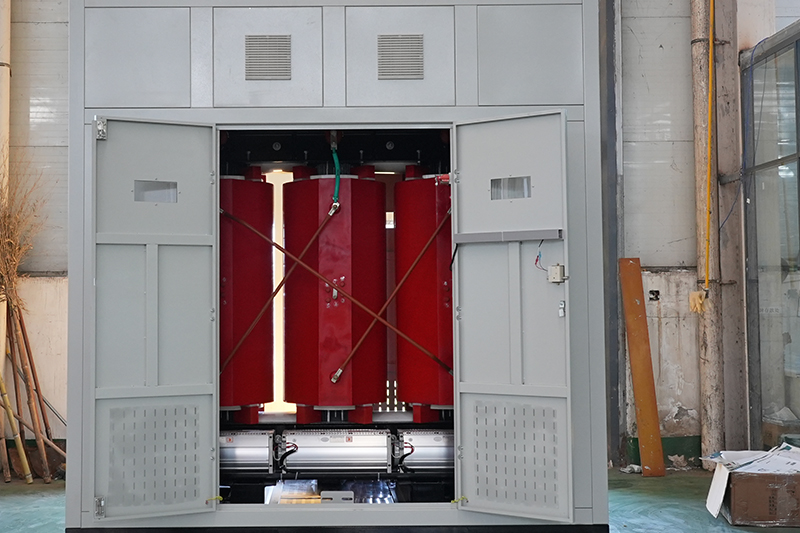
What Does kVA Rating Actually Mean?
kVA, or kilovolt-amperes, describes the total apparent power a transformer can deliver to a load, combining both the working power (kW) and the reactive power drawn by inductive loads such as motors, drives, and lighting ballasts. Because most facility loads are not purely resistive, sizing a transformer using kW alone will understate the real demand. This is why every dry type transformer nameplate, and every sizing chart, is expressed in kVA rather than kW.
Step 1: Calculate the Connected Load
Start by listing every piece of equipment the transformer will serve, along with its rated voltage, current, and power factor. For a facility with mixed single-phase and three-phase loads, group them separately, then sum the total kVA demand. If you only have kW values from nameplates, convert using the load's power factor.
Three-phase: kVA = (V × I × 1.732) ÷ 1000
kVA = kW ÷ Power Factor
For example, a three-phase load drawing 150 amps at 480 volts requires approximately 124.7 kVA (480 × 150 × 1.732 ÷ 1000).
Apply a Demand Factor
Not every connected load runs simultaneously at full output. Facilities typically apply a demand factor of 0.7 to 0.9 to the connected load total, reflecting the fact that motors cycle, lighting circuits are not all on at once, and HVAC equipment staggers its starts. Applying an unrealistic demand factor is one of the most common sizing errors, so use actual metered data where it is available rather than nameplate totals alone.
Step 2: Add a Growth and Safety Margin
A transformer is typically expected to serve a facility for 20 to 30 years, so sizing it exactly to today's load leaves no room for future expansion. Most engineers add a 15% to 25% margin on top of the calculated demand to accommodate added equipment, process changes, or facility expansion, without requiring a costly transformer replacement later. A transformer that is only ever loaded to 40% or 50% of its nameplate rating, however, is oversized and represents unnecessary upfront cost and continuous no-load losses.
Step 3: Apply Environmental Derating Factors
Dry type transformers are rated at standard conditions, typically 40°C maximum ambient temperature and installation at or near sea level. Two environmental factors commonly require derating or upsizing the transformer.
Ambient Temperature
In hot climates or poorly ventilated equipment rooms, ambient temperatures can regularly exceed the standard 40°C rating. Every degree above this reduces the transformer's safe continuous loading capacity, since the insulation system's thermal life is directly tied to operating temperature. For installations in tropical regions or enclosed mechanical rooms, selecting a transformer with a higher temperature class insulation system, or increasing the kVA rating, helps preserve expected service life.
Altitude
Above 1,000 meters of elevation, air density decreases and cooling efficiency drops. Most manufacturers require a capacity derating of roughly 0.3% to 0.5% per 100 meters above the standard altitude threshold. Projects at high-elevation sites should factor this into the final kVA selection.
Dry Type Transformer Sizing Chart
The chart below shows commonly available dry type transformer kVA ratings alongside the approximate full-load current they can supply at typical secondary voltages. Use it as a quick cross-reference once you have calculated your required kVA, then confirm the exact selection with the manufacturer's technical data sheet.
| kVA Rating | Full-Load Amps @ 208V (3-phase) | Full-Load Amps @ 480V (3-phase) | Typical Application |
|---|---|---|---|
| 15 | 42 | 18 | Small offices, lighting panels |
| 30 | 83 | 36 | Small commercial loads |
| 45 | 125 | 54 | Retail units, light industrial |
| 75 | 208 | 90 | Medium commercial buildings |
| 112.5 | 312 | 135 | Multi-tenant buildings |
| 150 | 416 | 180 | Light industrial, HVAC plants |
| 225 | 625 | 271 | Manufacturing facilities |
| 300 | 833 | 361 | Medium industrial plants |
| 500 | 1388 | 601 | Large industrial, data centers |
| 750 | 2082 | 902 | Heavy industrial, large campuses |
| 1000 | 2776 | 1203 | Utility substations, heavy process loads |
Standard kVA ratings are used rather than custom values because they align with manufacturer production runs, keep lead times shorter, and simplify future spare parts or replacement sourcing. When your calculated requirement falls between two standard sizes, round up to the next standard rating rather than down.
Step 4: Verify Voltage and Configuration
kVA rating alone is not enough. Confirm that the transformer's primary and secondary voltages, winding configuration (delta-delta, delta-wye, or wye-wye), and number of phases match the utility supply and the downstream distribution system. A correctly sized transformer with the wrong voltage configuration will not function safely, regardless of its kVA rating.
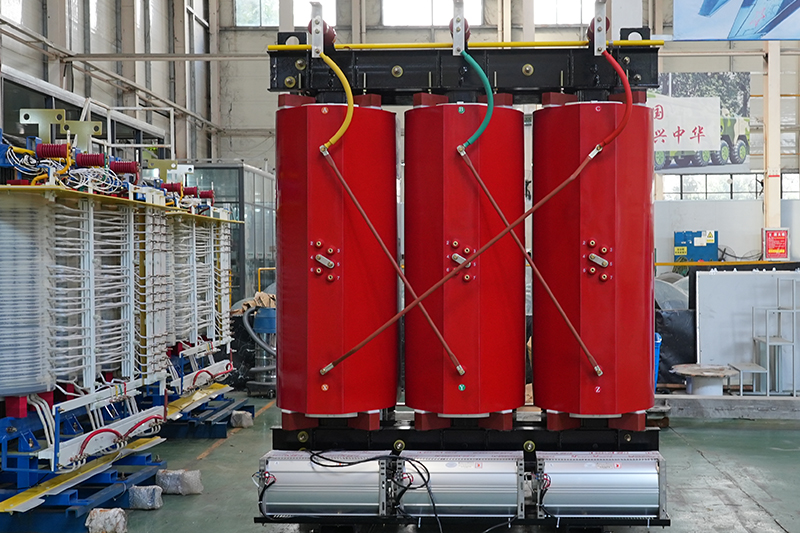
Common Sizing Mistakes to Avoid
Sizing to Nameplate Totals Instead of Actual Demand
Adding up every nameplate rating in a facility without applying demand factors nearly always results in an oversized, uneconomical transformer.
Ignoring Harmonic Loads
Facilities with significant non-linear loads, such as variable frequency drives, LED lighting, or IT equipment, generate harmonic currents that increase transformer heating beyond what the fundamental kVA calculation predicts. These facilities often require a K-rated dry type transformer, or additional derating, rather than a standard unit of the same kVA.
Overlooking Inrush and Starting Current
Large motor loads draw a starting current several times higher than their running current. While this is a short-duration event, it should be checked against the transformer's short-time overload capability, particularly on smaller kVA units serving large single motors.
Skipping the Growth Margin
Sizing a transformer exactly to a facility's day-one load frequently forces a costly replacement within a few years as equipment is added.
Choosing a Reliable Dry Type Transformer Partner
Correct kVA selection is only half the equation. Transformer quality, insulation system class, and manufacturing consistency determine how well the unit performs against its rated capacity over decades of service. ZTELEC Group manufactures a full range of dry type transformers engineered for stable performance across demanding ambient conditions, with standard and custom kVA ratings, insulation classes, and winding configurations available to match specific project requirements.
Need help matching a dry type transformer to your load profile? Contact ZTELEC's technical team for a sizing review and product recommendation tailored to your project.
dry type transformer sizing chart
how to size a transformer
kVA rating selection
ZTelec
dry type transformer
- more+releated article
- 2026-09-22Dry Type Transformer Sizing Chart: How to Sele
- 2026-09-22ZTELEC Opens Day 1 at Enlit Asia x MKI Electri
- 2026-09-21Ring Main Unit vs Switchgear: Key Differences
- 2026-09-20Dry Type Transformer vs Oil Filled: Which Shou
- 2026-09-18What Is a Ring Main Unit (RMU)? Function, Purp
- 2026-09-17Dry Type Transformer Maintenance: What You Act
- 2026-09-16What Is an Oil Immersed Transformer? Construct
- 2026-09-15Oil Immersed vs Dry Type Transformer: Which Is
- 2026-09-14Dry Type Transformer Manufacturers: 10-Point S
- 2026-09-12630 kVA Transformer Price – Oil Immersed vs
- ELECTRICAL INSULATION BOARD MATERIALS
- ELECTRICAL INSULATION MATERIALS
- POWER TRANSFORMER
- ENAMELED WIRE
- SWITCHGEAR
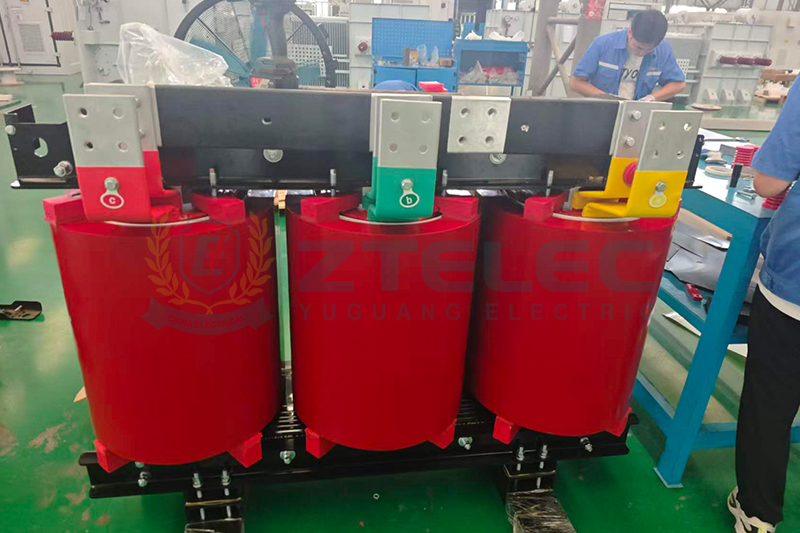
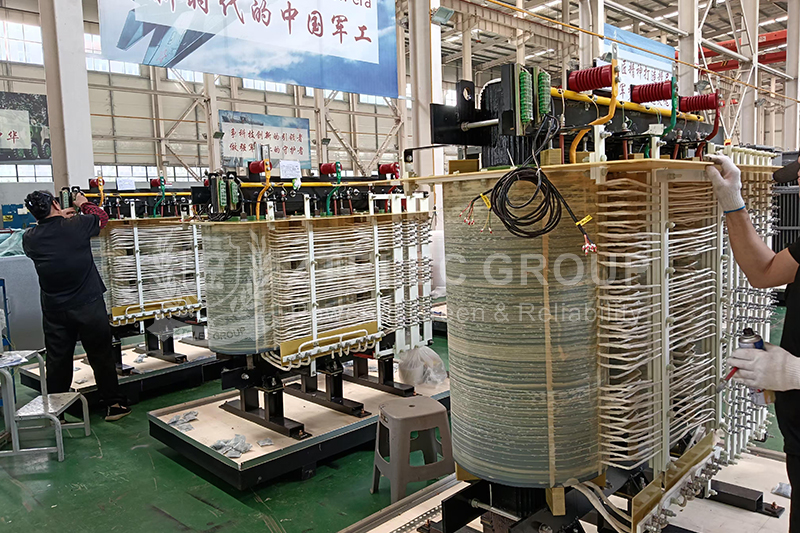


FR-4 Copper-Free Laminate | High-Performance Insulation Material

FR-4 Copper Clad Laminate Manufacturer & Supplier
kVA rating selection
how to size a transformer
dry type transformer sizing chart
Jakarta power exhibition
dry type transformer
Enlit Asia 2026
ZTelec
Oil immersed transformer
MKI Electricity Connect
Ring Main Unit
RMU
RMU vs switchgear
ring main unit vs switchgear
Medium Voltage Switchgear
dry type transformer vs oil filled
ring main unit working principle
ring main unit function
transformer inspection checklist
dry type transformer maintenance
cast resin transformer maintenance
transformer construction
transformer working principle
oil filled transformer
distribution transformer
Transformer comparison